A small Fox, with a relatively compact body, short legs, round ears and a short snout.
The largest subspecies of Arctic Fox, with a longer rostrum. Blue color phase predominates in
this subspecies. Coat is thick and dense in winter, with a majority of this fur being fine underfur.
Blue morph is brown tinged with a blue sheen in winter, changing to brownish dusky in summer,
usually darkest on top of head and rump, with face and legs mixed with white hairs, and ears
strongly edged with white. White morph is pure white in winter, the only marking being the small
black nose pad, while in summer it is brown dorsally and light gray to white on its underside.
Yellow eyes, with elongated pupils. Thickly haired feet. Tail is long and bushy. Females are
slightly smaller than males, with 6 to 7 pairs of mammae.
About the species
Reproduction and behavior
Gestation: 51-54 days.
Young per birth: 7, up
to 15.
Weaning: 28-35 days.
Sexual maturity: 9-10 months.
Life
span: Unknown, probably around 10 years.
Breeding season: Between February and May.
Births take place from April to July. They den in sandy, well drained
soils in low mounds and river cutbanks, and in coastal areas near
food resources, such as seal rookeries. Social organization of this
subspecies appears complex, and only a small percentage of adult
and yearling female bred. A high degree of conspecific tolerance exists
between certain individuals. Most nonbreeding Foxes attend the
litters of breeding pairs. Attendant Foxes protect, play with, and
probably feed pups. Old and sick individuals interact with pups at
den sites and rendezvous areas. Yearlings of both sexes are widely
tolerated near pups and breeding adults. Some yearlings attend
multiple dens. Family units of Arctic Foxes aggregate during mating and pup rearing, then break up and are solitary during the fall and winter.
Diet and interaction with the environment
Opportunistic feeders, eating
small mammals, birds, bird eggs, berries, carrion and garbage
when available. Main predators: None. Exceptionally adapted for
the extreme cold conditions of the Arctic region, with a highly
insulating fur, compact body, foot thermoregulation and reduced
metabolism during cold weather or food shortage. Mean home
range size for both sexes is small relative to that reported for
Arctic Foxes in other areas. Yearling home ranges show a large
degree of overlap, while core areas are virtually discrete. Most
yearlings engage in sporadic and unpredictable forays outside
their normal home ranges, increasing in distance and duration
over the summer.
Habitat:
Native to United States (Alaska). Restricted to the
Pribilof Islands, on both St. George and St. Paul Islands. The habitat is associated with treeless coastal areas and sea ice.
Conservation status: Vulnerable. Regional status: low status and high biological vulnerability;
action needed (USA). Populations of this subspecies are at
critically low levels and appear to be declining further. The
estimated population on St. Paul Island was 230 animals in 1991.
Threats include significant reduction in food resources, increased
exposure to diseases and toxins, and unsustainable levels of
direct human persecution. Additionally, the decline in sea ice
has likely led to increased genetic isolation. Misinformation as
to the origin of Arctic Foxes on the Pribilofs continues to foster
negative attitudes, and the long-term persistence of this endemic
subspecies is in danger.
Physiognomic information:
Body length: 45-67 cm.
Tail length: 25-42 cm.
Height: 28 cm.
Weight: 1.4-9 kg.
Skull: 12.7 cm
Taxonomy:
Photos and videos:
Documentary about Saint Paul Island (Pribilof Fox appears from 41:10 to 43:10).
The Arctic fox, also known as the white fox, polar fox, or snow fox, is a small fox native to the Arctic regions of the Northern Hemisphere and common throughout the Arctic tundra biome. It is well adapted to living in cold environments, and is best known for its thick, warm fur that is also used as camouflage. The Arctic fox preys on many small creatures such as lemmings, voles, ringed seal pups, fish, waterfowl, and seabirds.
Arctic foxes must endure a temperature difference of up to 90–100 °C between the external environment and their internal core temperature. To prevent heat loss, the Arctic fox curls up tightly tucking its legs and head under its body and behind its furry tail. Although the Arctic foxes are active year-round and do not hibernate, they attempt to preserve fat by reducing their locomotor activity.
Reproduction and behavior
Arctic foxes tend to select dens that are easily accessible with many entrances, and that are clear from snow and ice making it easier to burrow in. The Arctic fox builds and chooses dens that face southward towards the sun, which makes the den warmer. Arctic foxes prefer large, maze-like dens for predator evasion and a quick escape especially when red foxes are in the area. Natal dens are typically found in rugged terrain, which may provide more protection for the pups.
When red foxes are not in the region, Arctic foxes will use dens that the red fox previously occupied. Shelter quality is more important to the Arctic fox than the proximity of spring prey to a den. The main prey in the tundra are lemmings, which is why the white fox is often called the «lemming fox». When lemmings are abundant, the white fox can give birth to 18 pups, but they often do not reproduce when food is scarce.
The "coastal fox" or blue fox lives in an environment where food availability is relatively consistent, and they will have up to 5 pups every year. Arctic foxes are primarily monogamous and both parents will care for the offspring. When predators and prey are abundant, Arctic foxes are more likely to be promiscuous and display more complex social structures. On the coasts of Svalbard, the frequency of complex social structures is larger than inland foxes that remain monogamous due to food availability.
Diet and interaction with the environment
Arctic foxes generally eat any small animal they can find, including lemmings, voles, other rodents, hares, birds, eggs, fish, and carrion. In areas where they are present, lemmings are their most common prey, and a family of foxes can eat dozens of lemmings each day. In some locations in northern Canada, a high seasonal abundance of migrating birds that breed in the area may provide an important food source. Arctic foxes survive harsh winters and food scarcity by either hoarding food or storing body fat subcutaneously and viscerally.
Extreme adaptation
The Arctic fox lives in some of the most frigid extremes on the planet, but they do not start to shiver until the temperature drops to −70 °C . Among its adaptations for survival in the cold is its dense, multilayered pelage, which provides excellent insulation. Additionally, the Arctic fox is the only canid whose foot pads are covered in fur. The fur of the Arctic fox provides the best insulation of any mammal. Since less of its surface area is exposed to the Arctic cold, less heat escapes from its body.
One way that Arctic foxes regulate their body temperature is by utilizing a countercurrent heat exchange in the blood of their legs. Arctic foxes can constantly keep their feet above the tissue freezing point −1 °C when standing on cold substrates without losing mobility or feeling pain. Arctic foxes maintain the temperature in their paws independently from the core temperature. If the core temperature drops, the pad of the foot will remain constantly above the tissue freezing point.
ABOUT THE COMMON ARCTIC FOX
Reproduction and behavior
Gestation: 52 days.
Young per birth: 6-12, exceptionally up to 25.
Weaning: 28-42 days.
Sexual maturity: 10- 12 months.
Life span: 10 years.
Breeding season: April and May.
Newborns of both color phases are covered with short velvety dark brown fur, which becomes lighter and longer after the pups reach 2 weeks of age. Blue-phase pups acquire their characteristic dark color by the time they are 2 months old. They prefer to den in light, sandy soil along riverbanks, on small hillocks, and occasionally in talus. On the open tundra, dens are usually a mound 1-4m high. Social behavior: Monogamous pairs in the breeding season.
Diet and interaction with the environment
Lemming Foxes, typical of inland locations, have mostly white coats, migrate further and feed on lemmings and other small rodents; coastal Foxes live along the coasts of the Arctic, have mostly blue coats and feed on migratory birds, eggs, fish, seal carcasses and marine invertebrates. Main predators: Red Fox, wolverine, golden eagle, brown bear, wolf.
Mainly nocturnal, but their activity patterns are flexible depending on their prey. They may travel great distances during winter and traverse extensive pack ice fields. They may follow polar bears to scavenge kill remains. Territories are defended directly by chasing and mobbing and indirectly via scent marking and vocalizations, especially during the denning season. They scent mark by defecating on visually conspicuous or elevated landmarks such as rocks and eskers. Good swimmers. Common vocalizations include growls, barks and coughs, but also employ visual signs for communication.
Habitat
Arctic and alpine tundra, often near coasts. Native to Canada, Finland, Norway, Russia, Sweden, United States. Circumpolar distribution, including the Arctic and tundra zones of North America and Eurasia, parts of the alpine zones of Fennoscandia, and islands of the Arctic, North Atlantic and North Pacific Oceans. In North America, Arctic Foxes also occur on several Aleutian Islands in Alaska, where they were introduced for fur farming.
Conservation status: Least Concern. Regional status: Critically Endangered (Norway), protected by law in Finland, Sweden and Norway. It is fairly abundant in North America. The release of many Arctic Foxes to over 450 islands in Alaska had catastrophic effects on island avifauna populations.
A small Fox, with a relatively compact body, short legs, round ears and a short snout. A
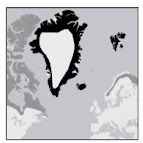
small-sized subspecies of Arctic Fox, with white and blue morphs being common along the west coast of Greenland, and Iceland, and white morphs being in a great majority in north-eastern Greenland
and Svalbard. Winter coat is very dense and thick. Summer coat is thinner. Molting is from May
to early July, and from September to December. White morph is pure white in winter, changing
to mottled gray brown dorsally, and light gray to white on its underside in summer. Blue morph
is gray brown, with a bluish tinge in winter, changing to dark gray brown in summer. Yellow
eyes, with elongated pupils. Thickly haired feet. Tail is long and bushy. Females are slightly smaller
than males, with 6 to 7 pairs of mammae.
About the species
Reproduction and behavior
Gestation: 52-54 days.
Young per birth: 5-10,
smaller litter than mainland subspecies.
Weaning: 28-35 days.
Sexual
maturity: 12 months.
Life span: 10 years.
Breeding season: March.
Births occur in late May or early June. The male has a full role in bringing
up the pups, but nonbreeding yearling female may assist mated pairs for
the first 6-8 weeks. Dens are often located under large rocks. Social behavior: mated pairs and monogamous.
Diet and interaction with the environment
The
coast is very important and a stable resource of edible things, such
as birds and eggs, seal carcasses, and invertebrates. In inland
habitats main foods include ptarmigan in winter, and migrant birds,
particularly waders and geese, in summer. Sheep are a relatively
unimportant constituent of the diet. There are no lemmings in
Iceland, Svalbard and western Greenland. Since the food abundance is
highly seasonal, they cache food for the winter. Main predators:
None. During the mating season, they have a territory, the size of
which depends on food availability, ranging from 35 to 50 km2
. They
have a number of adaptations that allow them to survive the harsh
Arctic winter: a lower metabolic rate and lower body temperature in
winter, which allows them to conserve energy, a superbly insulated
winter coat, with a thick layer of fat as a food reserve; the short
snout and small rounded ears also help to conserve heat.
Habitat:
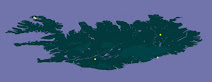
Native to Iceland, Greenland and Svalbard islands (Norway), and Jan Mayen (Norway) until 1930.
Found throughout Iceland, with a higher density in the western fjords. In
Svalbard, they are found on all the islands.
Their habitat is the arctic tundra, along rocky beaches, and far out and widely
dispersed on the frozen pack ice. They prefer the tundra in the
vicinity of bird cliffs during the summer. In fact, the Arctic Foxes (both lagopus lagopus and lagopus fuliginosus subspecies) are the only native mammals in Iceland.
Conservation status: Least Concern. Population in Iceland had been growing quite steadily up until 2010,
but has shrunk by one-third over the past four years, at about 6.000 / 7.000 foxes. Main threats include climate change, lack of prey, and
hunting at all seasons; they are regarded as vermin for supposed
sheep-killing and damage to eider colonies. Its fur is not used
anymore since it lost value. The Hornstrandir Nature Reserve is one
of the few regions where it is protected in Iceland. Arctic Foxes were
bred on farms in Iceland from the 1930s until the late 1940s, and again
after 1980; the farm-bred blue Foxes are larger and more fertile than
the native animals and their color is much lighter. Some have escaped
and bred with Icelandic Foxes in the wild, especially in the southwestern regions, so
gene swamping may represent a threat to the Icelandic Arctic Fox.
Population on Svalbard is stable, estimated at 2.500 animals, despite
centuries of intense hunting; outside the protected areas, locals are
still allowed to hunt during a certain period in the winter. The Arctic
Fox was eradicated on Jan Mayen in the 1930s as a result of trapping.
Population in Greenland is also currently stable and is estimated at
more than 10.000 animals.
Physiognomic information:
Length (without tail): 45-67 cm.
Tail: 25-42 cm.
Height: 28 cm
Weight: 2.5-5 kg.
Skull: 11.9 cm.
Taxonomy:
Photos and videos:
Amateur documentaries about Iceland and the Icelandic Arctic Fox.